Overview
An OEM developing next-generation photolithography equipment for advanced PCB packaging required large modular chamber structures capable of maintaining exceptionally stable operating environments. The chambers needed to integrate precision optical systems while simultaneously controlling airborne contamination, temperature, pressure, and vibration—all within a modular design that remained serviceable for maintenance.
MEP Technologies developed new assembly concepts and manufacturing methods that enabled airtight, mechanically stable chamber structures capable of meeting the demanding environmental requirements of high-precision photolithography systems.
The Challenge
High-resolution photolithography systems depend on extremely stable environmental conditions to achieve micron-level accuracy.
The customer required chamber structures capable of supporting:
- ISO Class 5 (Class 100) or better clean air conditions
- Thermal stability of ±2°C with drift below 0.5°C/hour
- Positive internal pressure between 8–12 Pa
- Airtight construction to prevent contamination and radiation leakage
- Isolation from vibration that could compromise optical alignment
The challenge became significantly more complex because the chambers also needed to:
- Separate controlled and uncontrolled environmental zones
- Integrate multiple independent airflow paths and filtration systems
- Allow external maintenance access through removable panels
- Maintain extremely small clearances while preventing metal-to-metal contact that could transmit vibration
- Be assembled modularly without introducing gaps that would compromise environmental control
Conventional welding and bolting methods could not satisfy these seemingly conflicting requirements.
MEP Technologies’ Approach
MEP Technologies developed new mechanical assembly strategies specifically designed for precision environmental chambers.
Precision Modular Chamber Architecture
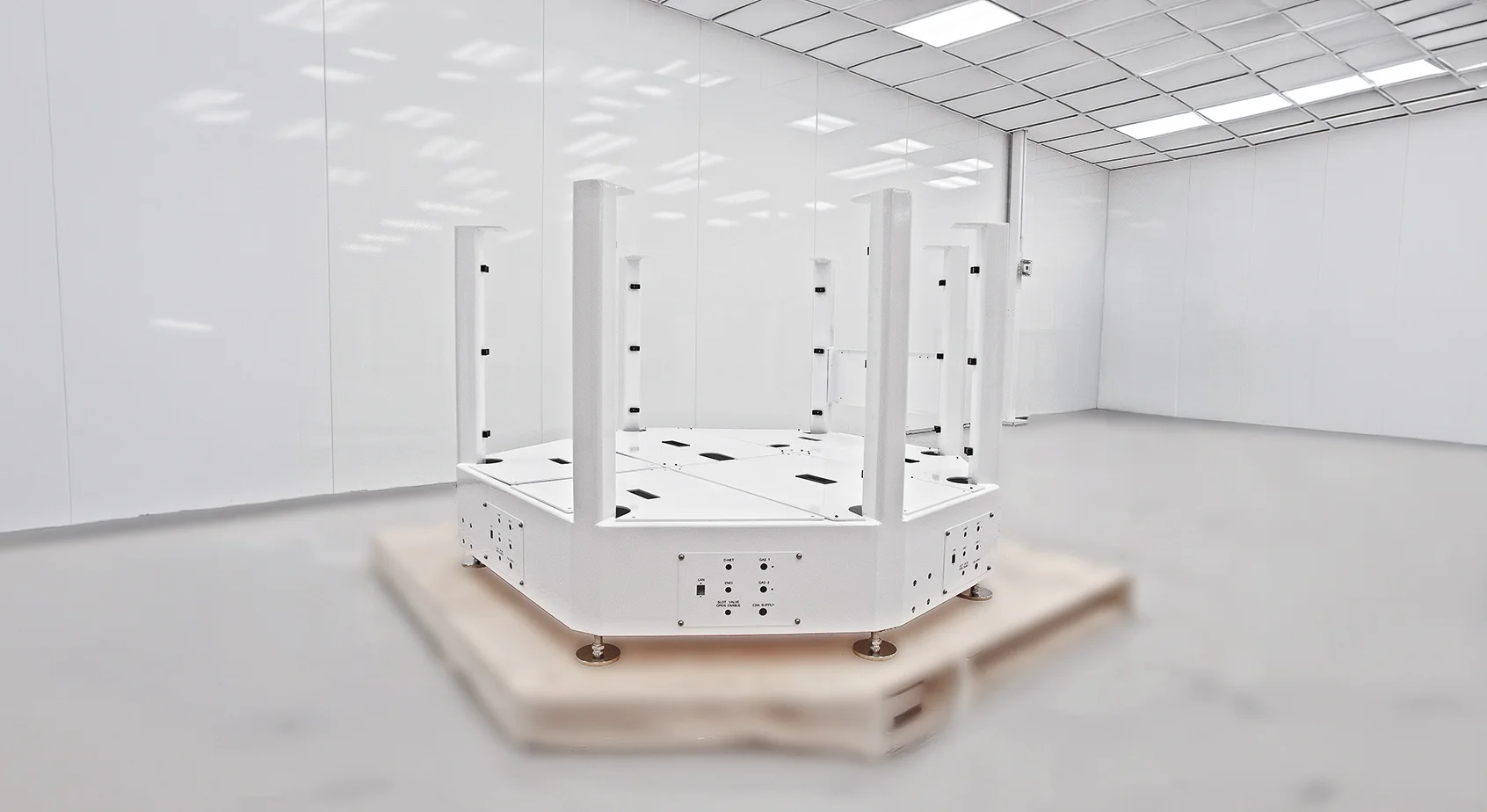
A modular structure was engineered to support:
- Separate controlled and service compartments
- Integrated filter housings
- External maintenance panels
- Internal airflow management components
- High structural rigidity with minimal dimensional variation
The design maintained environmental integrity while improving accessibility for servicing and filter replacement.
Airtight Assembly System
The engineering team developed new joining concepts combining:
- Precision-formed structural members
- Welded tubular frameworks
- Mechanical fastening with integrated bushings
- Folded panel geometries
- Engineered sealing interfaces
This approach minimized dimensional variability while eliminating gaps that could affect cleanliness, pressure control, and thermal stability.
Optimized Air Duct Manufacturing
MEP Technologies also developed improved fabrication methods for complex steel air ducts responsible for directing multiple controlled airflow zones.
Extensive testing compared:
- Single-piece bent duct construction
- Multi-section welded assemblies
- Nested sectional designs
The team identified welding-induced thermal distortion as a major limitation and developed an optimized welding strategy using integrated tabs that significantly reduced deformation while maintaining airtight performance.
Technical Innovations
This project generated new manufacturing knowledge in several critical areas:
- Assembly methods for airtight modular environmental chambers
- Precision integration of removable access panels without compromising environmental control
- Vibration-isolated structural concepts for high-precision optical equipment
- Improved fabrication techniques for complex airtight air duct systems
- Welding strategies that minimize thermal distortion during large structural assembly
Business Impact
By developing new modular assembly methods, MEP Technologies enabled the production of highly controlled environmental chambers capable of supporting next-generation photolithography equipment.
The project demonstrates MEP Technologies’ ability to:
- Engineer complex electromechanical assemblies for precision manufacturing equipment
- Deliver integrated manufacturing solutions for semiconductor OEMs
- Solve multidisciplinary engineering challenges involving structural, thermal, airflow, and vibration requirements
- Manufacture high-mix, low-volume equipment with exceptional dimensional precision
- Support advanced manufacturing systems requiring strict environmental control